Billy May
Billy May is the youngest child in the fractured May household of "Stud City," the story-within-a-story written by the adolescent Gordon Lachance. He is the half-brother of the narrator Chico (Edward May) and the son of Sam May and his second wife Virginia. Billy appears only in a handful of scenes, but each one places him at the center of the family's unraveling—a small boy who witnesses, suffers, and tries to stop the violence that his elders cannot control.
Identity and Family Position
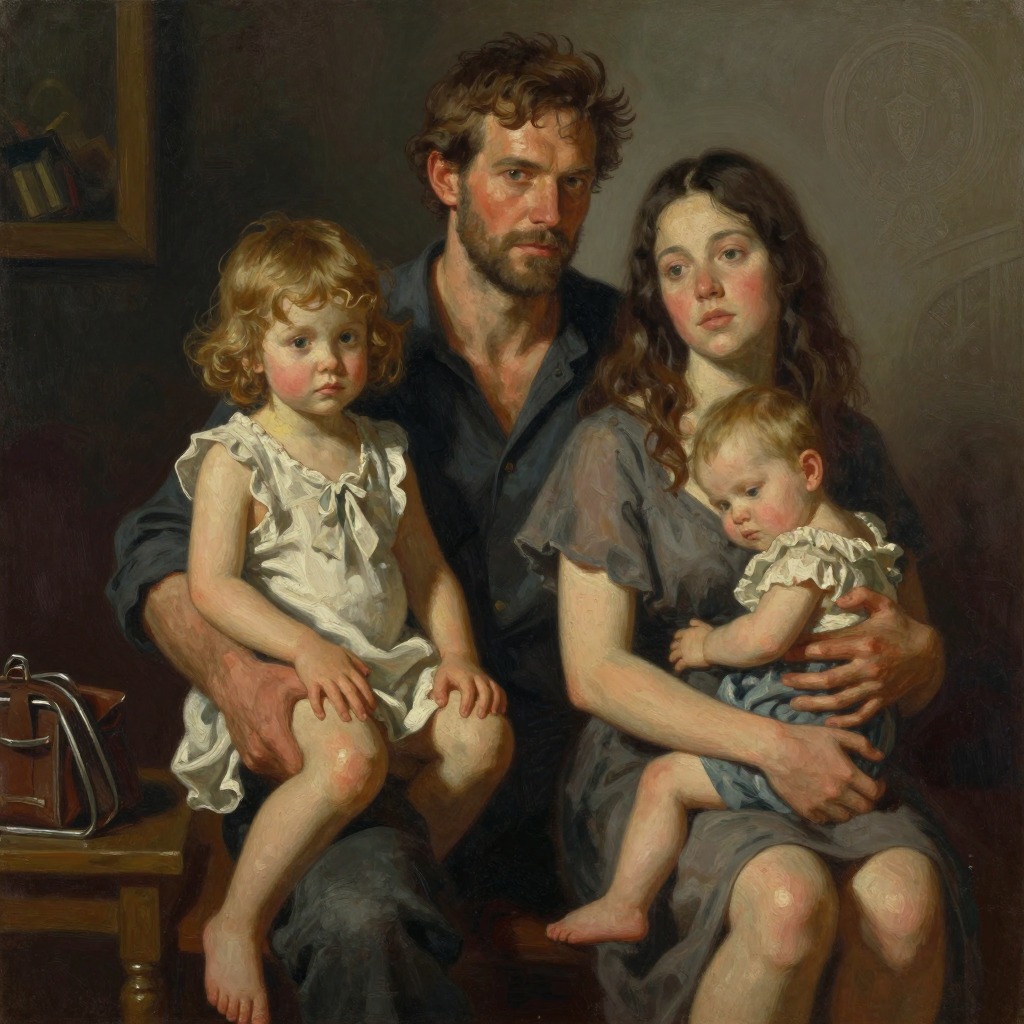
Billy is the infant in the tinted studio photograph that sits on top of the family's television set: the picture shows Sam May, Virginia, a high-school-age Johnny, a grammar-school-age Chico, and an infant Billy held by Johnny. That image, taken less than a month after Sam married Virginia, freezes a moment before the family's disintegration. By the time of the story's present, Billy is old enough to watch television, eat franks and beans, and beg his older brother for a trip to the movies. He is also old enough to be terrified by the shouting matches that have become routine in the house.
Life in the May Household
Billy lives in a cramped house where the fiberboard walls are so thin that Chico can hear his father and Virginia "going at it" at night. The room that was once Johnny's—now Chico's—has a door that swings stealthily closed unless blocked open, and the floor has a "slightly crazy hipshot angle." Billy shares this space with a stepmother who, Chico believes, has ground their father down and who, Chico suspects, was having an affair with Johnny before Johnny's death. Billy is too young to understand the adult tensions, but he is not too young to feel their effects.
Key Actions and Emotional Responses
Billy's most significant moments all involve his reaction to the escalating conflict between Chico and Sam May. When Chico returns home after spending the afternoon with Jane, Billy jumps up excitedly and asks, "Eddie, hey Eddie, you know what Uncle Pete said? He said him and a whole mess of other guys sank a kraut sub in the war! Will you take me to the show next Saturday?" Chico pulls his hair, and Billy hollers and laughs and kicks him in the shins—a moment of ordinary roughhousing that Sam May immediately tries to stop. Later, when Chico and his father begin to scream at each other over Virginia, Billy stands in the kitchen doorway with a plate of franks and beans. The plate tips, beanjuice runs onto the floor, and Billy's eyes go wide, his mouth trembling. As the shouting escalates—Chico accusing his father of being "pussywhipped," Sam threatening to break Chico's nose—Billy gives "a great wail of terror, drops his plate of franks and beans, and covers his face with his hands. Beanjuice splatters his Sunday shoes and sprays across the rug." He then screams, "Stop it, Eddie! Stop yelling at Daddy! Stop it, please!" Billy is the only character in the scene who tries to stop the violence, and his plea is ignored.
Relationship with Chico
Chico feels a protective, if exasperated, affection for Billy. When Billy asks to go to the show, Chico teases him—"Maybe if you kiss my shoes every night before supper all week"—but he is grinning. Later, when Chico storms out of the house after the fight, he thinks of Billy: "Me and Billy, we have to live with her!" Billy is the one person in the household Chico does not hate, and the one person he cannot save. In the story's final domestic scene, Virginia uses Billy's presence as a weapon, telling Chico, "Please go now, Ed. You're scaring Billy." Chico leaves, and Billy is left behind with the stepmother and the father who cannot stop crying.
Narrative Role and Significance
Billy May functions as the story's most vulnerable witness. He is too young to understand the sexual and emotional betrayals that have poisoned the family—the affair between Virginia and Johnny, the guilt that Chico carries, the father's helpless rage—but he is old enough to be traumatized by their consequences. His presence forces the reader to measure the cost of the adults' failures not in abstract terms but in the specific image of a small boy covering his face and screaming for the yelling to stop. In the larger frame of Gordon Lachance's memoir, Billy May is a reminder that the damage done by family secrets and violence does not stop with the people who make the choices; it spills onto the children who have no choices at all.